When people think about wound healing, they often focus on cleaning the wound, applying medication, or changing dressings regularly. However, one important step is frequently overlooked—safe adhesive removal. Whether you're using surgical tapes, wound dressings, ostomy appliances, or medical bandages, the way these adhesives are removed can significantly impact the healing process.
Improper removal of medical adhesives can damage healthy skin, cause unnecessary pain, and even delay recovery. Understanding the role of adhesive removal is essential for protecting the skin and creating the ideal environment for wounds to heal effectively.
Why Adhesive Removal Matters
Medical adhesives are designed to keep dressings securely in place, protecting wounds from dirt, bacteria, and external contaminants. While they play a vital role in wound care, removing them incorrectly can lead to skin trauma.
Peeling adhesive tapes too quickly or forcefully may strip away the outer layer of skin, resulting in redness, irritation, blisters, or even small skin tears. This condition, known as Medical Adhesive-Related Skin Injury (MARSI), is especially common among older adults, children, and individuals with sensitive or fragile skin.
When healthy skin surrounding a wound becomes damaged, the body's healing process is interrupted. Instead of focusing entirely on repairing the wound, the body must also heal the newly injured skin, increasing discomfort and recovery time.
The Connection Between Adhesive Removal and Wound Healing
Successful wound healing depends not only on treating the wound itself but also on protecting the surrounding skin. Healthy skin acts as a natural barrier against bacteria, reduces infection risks, and supports proper dressing application.
Gentle adhesive removal helps:
- Prevent unnecessary skin damage
- Reduce pain during dressing changes
- Minimize redness and irritation
- Lower the risk of skin tears
- Preserve healthy surrounding skin
- Improve patient comfort
- Support faster recovery
Every dressing change should leave the skin intact—not damaged. That's why healthcare professionals recommend using adhesive removers instead of pulling medical tapes directly from the skin.
Common Challenges During Dressing Changes
Many patients experience discomfort every time a dressing is replaced. Common issues include:
- Pain while removing medical tapes
- Sticky adhesive residue left on the skin
- Redness around the wound
- Fragile skin peeling away with the dressing
- Increased anxiety before dressing changes
These problems may seem minor, but repeated skin trauma can slow recovery and make routine wound care much more difficult.
Using the right adhesive remover makes dressing changes smoother, safer, and far more comfortable.
The Importance of Skin Protection
Healthy skin surrounding a wound plays a major role in preventing complications. Damaged skin allows moisture, bacteria, and irritants to penetrate more easily, increasing the chances of infection and inflammation.
This is particularly important for people who require frequent dressing changes, such as those managing:
- Surgical wounds
- Chronic wounds
- Pressure injuries
- Diabetic ulcers
- Ostomy care
- PICC line or catheter dressings
Protecting the skin during every dressing change supports long-term skin care and improves overall treatment outcomes.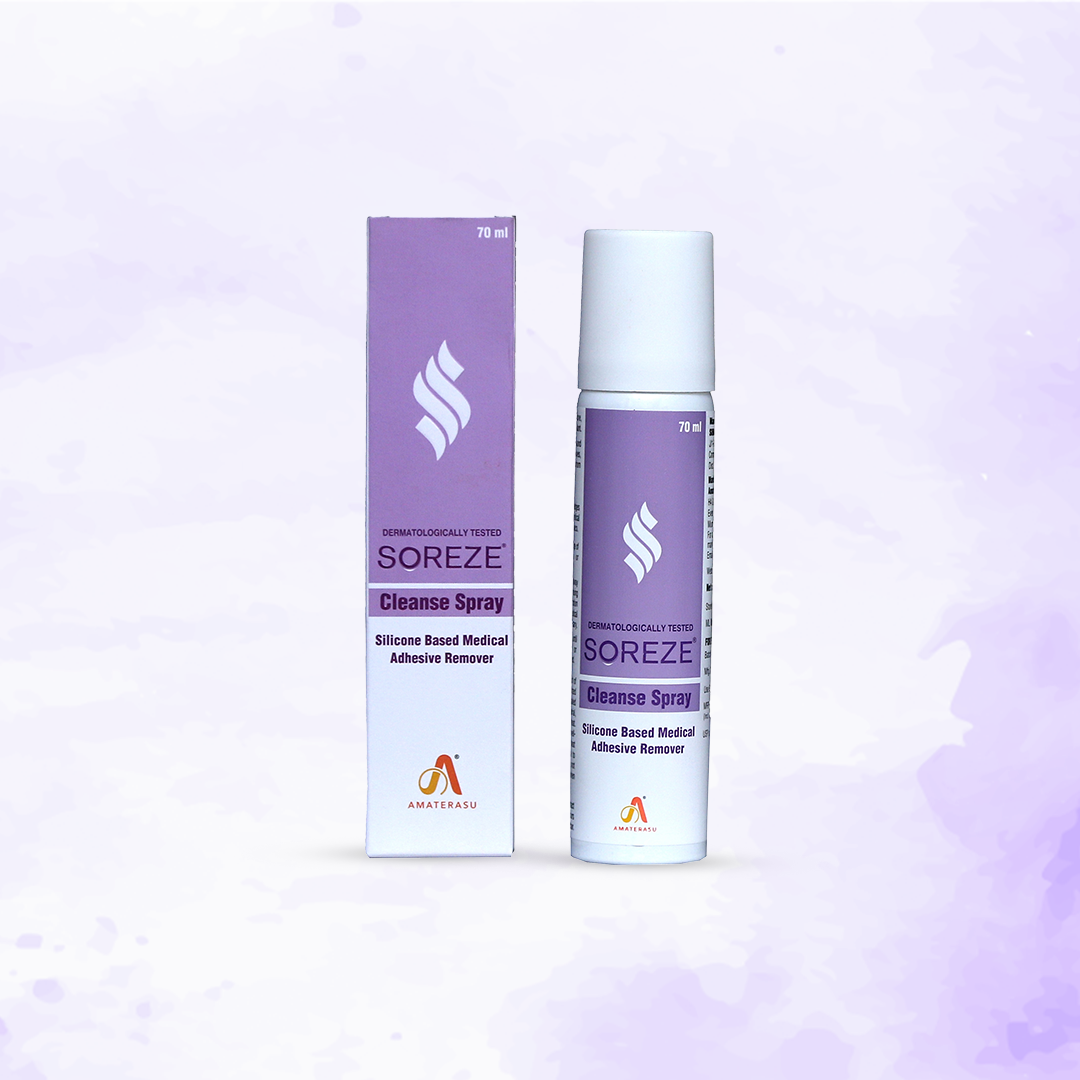

How Soreze Cleanse Spray Helps
An effective adhesive remover can make a noticeable difference in everyday wound care. Soreze Cleanse Spray is specially designed to remove medical adhesive residues gently while protecting delicate skin during dressing changes.
Its dermatologically tested formula works by dissolving adhesive quickly without excessive rubbing or pulling. This allows tapes, dressings, and adhesive devices to lift away smoothly, reducing discomfort and minimizing the risk of skin damage.
Soreze Cleanse Spray is suitable for removing adhesive from wound dressings, surgical tapes, ostomy appliances, and other medical adhesive products. The quick-drying, non-stinging formula leaves no greasy residue, making it convenient for healthcare professionals, caregivers, and patients alike. Available in both 30 ml and 70 ml sizes, it offers a practical solution for home care as well as clinical settings.
By helping preserve healthy skin around the wound, Soreze Cleanse Spray supports a more comfortable dressing-change experience and contributes to better overall wound care practices.
Best Practices for Safe Adhesive Removal
To protect your skin during dressing changes:
- Peel adhesive slowly instead of pulling it off quickly.
- Support the surrounding skin while removing dressings.
- Use a medical adhesive remover to loosen the adhesive first.
- Avoid excessive rubbing or scraping.
- Check the skin after every dressing change for redness or irritation.
- Replace dressings as advised by your healthcare professional.
These simple steps can greatly reduce discomfort while promoting healthier skin and better healing outcomes.
Effective wound healing involves much more than cleaning and covering a wound. Every dressing change is an opportunity to either protect or damage the surrounding skin. Gentle adhesive removal helps preserve healthy tissue, reduces pain, and supports faster recovery.
By incorporating proper adhesive removal techniques and using products like Soreze Cleanse Spray, patients and caregivers can make dressing changes safer, more comfortable, and more effective. Protecting the skin today can make a meaningful difference in how well wounds heal tomorrow.